Centre for Strategic Urban Research
The Centre for Strategic Urban Research is a research centre focusing on the development, management and quality of urban areas. The Centre, established in 2004, conducts inter-disciplinary research collaboration between the University of Copenhagen, the Aarhus School of Architecture, Aalborg University, the Royal Danish Academy and Roskilde University. From 2004 to the beginning of 2016 the Centre was supported by Realdania Foundation. Since 2011, the Centre has focused on network and publication of the research results.
Strategic Research at the Intersection of Theory and Practice
The Center works to generate and disseminate strategic knowledge that can strengthen decision making in urban development within a dynamic and global context. This is achieved through research projects, conferences, and workshops where researchers and practitioners meet to exchange knowledge and perspectives. The focus is on sustainability, interdisciplinarity, and the practical application of research findings. From 2004 to 2016, the Center was supported by Realdania, which enabled many of its research projects.
Interinstitutional Network
The Center brings together researchers from several Danish universities and schools of architecture who participate in national and international networks and collaborate with public authorities and organizations. Its partnership with the Danish Town Planning Institute ensures that research is widely disseminated and contributes directly to professional practice and policy making.
Contact Information
Inquiries to the Center for Strategic Urban Research can be directed to the Center's Academic Coordinator Kamilla Stener Møller / kahm@ign.ku.dk / +45 3533 1630
Annual Conference: Bridging Research and Practice
Each year, the Center for Strategic Urban Research hosts the conference Urban Research Without Borders, focusing on a contemporary theme in urban development. The conference brings together researchers and practitioners to share knowledge, experiences, and perspectives, creating a forum where theory and practice meet. Its aim is to strengthen the foundation for urban development decision making through dialogue and knowledge exchange across disciplinary boundaries.
Over the years, Urban Research Without Borders has addressed a range of themes. In 2025, the focus was on artificial intelligence and urban planning; in 2024, on creating sustainable development in Denmark; in 2023, on achieving quality in urban densification; in 2019, on the city and the sea; in 2018, on who we plan for; in 2017, on tourism as a development strategy; in 2012, on urban nature; and in 2011, on cities without borders.
Participating Research Environments
The Center's partners include many of Denmark's leading research institutions in the fields of urban development and urban planning.
The Section for Landscape Architecture and Planning conducts research in the fields of urban and regional development, landscape architecture, landscape planning and management, as well as outdoor recreation, tourism, and perceptions of nature. The aim of the research is to develop a knowledge base for the management of cities and landscapes that are sustainable, provide attractive living environments for people, and support cultural development and economic activity. The research encompasses the study of driving forces and development trends, people's use and understanding of the physical environment, and planning and management methods, including the advanced application of geographic information systems (GIS).
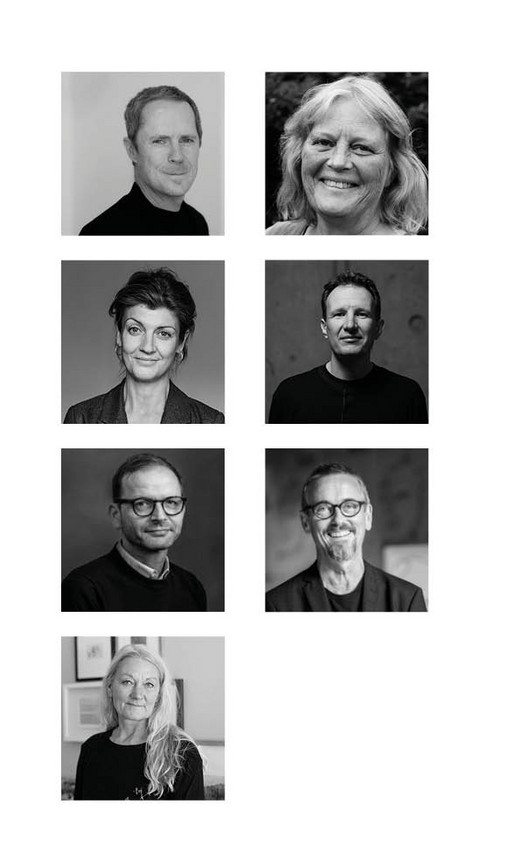
Head of the Center: Gertrud Jørgensen, Professor. Gertrud Jørgensen
The Section of Geography conducts teaching and research in both physical geography, including soils, landforms, and climatic conditions, and human geography, including agriculture, ecology, urban and regional geography, and related fields. Traditionally, economic and regional geography, social geography, and spatial planning have been central themes in the Section’s research. In recent years, these areas have been complemented by a stronger focus on globalization, the transformation of economic and social conditions, and detailed studies of urban policy as an extension of planning studies.
Head of the Center: Høgni Kalsø Hansen, Associate Professor.
Research Laboratory 1 aims to advance and critically engage with contemporary processes of transformation in architecture and urbanism. The laboratory addresses a broad range of issues and opportunities within the field. The concept of territories reflects the laboratory’s understanding of transformation as a process that operates across multiple scales and through overlapping layers of time and architectural practices. Its research involves value based discussions on aesthetics, urban development, sustainability, ecological restoration, heritage conservation, and related topics.
Head of the Center: Tom Nielsen, Professor.
Current Research Projects
- Bæredygtige Kulturmiljøer (Sustainable Cultural Environments)
The Department of Architecture, Design and Media Technology was established in January 2010 through the merger of the former Department of Architecture and Design and the Department of Media Technology. Its vision is to develop an innovative cluster of engineering based education and research environments that integrate creativity, engineering, and technology across the disciplines of architecture, urban design, industrial design, and interactive media.
The Department is unique within the Danish context, bringing together the fields of architecture, design, media, and technology under one roof. It aims to capitalize on the strengths of Aalborg University and its extensive experience in interdisciplinary research and educational environments.
Head of the Center: Ole B. Jensen, Professor.
The Department of Architecture, Urbanism and Landscape operates across a wide range of scales, from the design of local childcare facilities to the planning of university campuses in knowledge cities; from the design of exhibition spaces and green areas to strategies for regional experience economies; and from individual senior housing units to the development of cities characterized by significant demographic diversity. The Department addresses challenges ranging from global urbanization, climate change, and resource scarcity to increasing demands for mobility and flexibility. Its overarching goal is to enhance quality of life while strengthening social cohesion, urban identity, and cultural understanding. Through integrated and holistic approaches, the Department seeks to contribute solutions to some of society's most pressing challenges.
Head of the Center: Deane Alan Simpson, Professor.
Research in Mobility, Space, Place, and Urban Studies focuses on examining and identifying the spatial reorganization of society. It explores the relationships between everyday life, culture, settlement patterns, and economic activities. Particular attention is given to emerging forms of mobility, social marginalization, intercultural relations, new technologies, and the creative industries, all of which call for new theoretical perspectives and practical responses.
Head of the Center: Maja de Neergaard, Associate Professor.
The Department of Social Sciences and Business focuses on social, economic, and societal transformations and their impacts on society, both nationally and globally. The Department generates new scientific knowledge and understanding of social change, confrontation, and conflict. Its teaching is research based, with a strong emphasis on development, interdisciplinarity, and the refinement of methodological skills.