Beyond Cooperation: We Need a Clear, Coordinated Vision
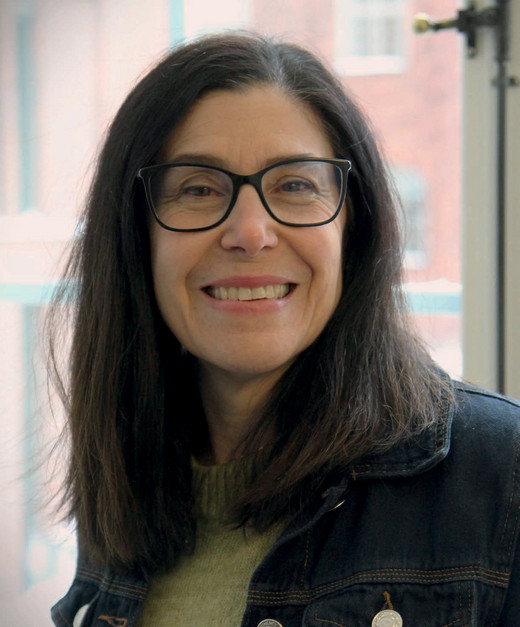
Vania Ceccato has dedicated over 20 years to researching the relationship between urban planning, crime, and our perception of safety – including the role of architects and urban planners in crime prevention and the reasons behind the neglect of safety-enhancing factors in their decision-making processes.
We spoke with her about the challenges of integrating crime prevention into urban planning, how di erent disciplines can collaborate to create cities, where we feel safe, and what role urban sustainability can play.
What are the challenges when it comes to integrating crime prevention into urban planning?
There are several challenges. For one, we still work in silos. The problem is that short-term funding often restricts the long-term view needed for safety interventions. Without shared knowledge and resources, it becomes difficult to make meaningful progress. Lasting change can´t happen if you´re always focused on short-term solutions. Additionally, there’s a signicinant loss of institutional memory, particulary in municipalities. If a good planner leaves, very little is left behind.
How can we ensure that crime prevention and safety-enhancing measures are not overlooked in urban planning decisions, and how can this gap be e ectively addressed?
First of all, architects, urban planners, designers, and engineers—the “shapers” of urban space—often see crime and safety as outside their area of responsibility. They can impact safety in two ways: by integrating crime-reducing features during the planning or construction of new residential areas and/or by modifying existing areas using strategies like situational crime prevention. In short, this approach reduces crime by altering the immediate environment to make offenses more difficult, riskier, or less rewarding.
The issue lies in the education of planners and safety experts. Right now, these fields are quite separate. Architects and urban planners often have limited exposure to crime prevention concepts.
Safety experts typically focus on social prevention, while urban planners and architects take a more situational approach, looking at where and when crime occurs. On the other hand, security experts are more concerned with strategies to prevent criminal behavior. To bridge this gap, we need to bring the two groups closer together through better education and collaboration.
About Vania Ceccato
Vania Ceccato is a professor at the Department of Urban Planning and Environment at the KTH Royal Institute of Technology in Stockholm. She has been at the forefront of e orts to improve our understanding of how urban environments inuence crime and perceptions of safety. She is also the head of the Urban & Community Safety Research Group (UCS) and the coordinator of Network Safeplaces.
How can urban planners and criminologists collaborate more effectively to create safer cities, and what obstacles hinder this collaboration?
The most effective way to collaborate is to start by identifying a problem that needs to be addressed. All stakeholders should first understand the nature of the problem and then work together to find solutions. This process must be connected to long-term goals that are institutional rather than individual. The main obstacle is the deregulation process in many countries. Different stakeholders are responsible for different parts of a space, like a park or a train station. While cooperation is common, coordination often falls short because there’s no long-term shared vision. People involved in these projects often don’t fully understand what’s going on in the area or how to tackle the challenges. Cooperation alone isn’t enough; it needs to be accompanied by a clear, coordinated goal and vision.
What role does urban sustainability play in crime prevention, and how can planners integrate safety measures without compromising other priorities?
That’s a tough question, and there will always be conflicting goals, such as economic growth versus environmental or social concerns. As I mentioned earlier, having shared values is key. Sustainability is a great reference point because it encompasses multiple aspects, regardless of your specific expertise. Our challenges are complex, and while we may never fully solve them, we need to keep pushing toward solutions. This doesn’t mean waiting for perfect clarity; actions still need to be taken now. It’s important to have concrete reference points, such as sustainability, that guide us.
On another note, I disagree with using gender-neutral approaches to safety. Why? Because, no matter where you are in the world, women, people with disabilities, and LGBTQI+ individuals are more vulnerable in public spaces than men. These imbalances need urgent attention from policymakers, and this is something we can work on today.
What are the challenges when it comes to integrating crime prevention into urban planning?
There are several challenges. For one, we still work in silos. The problem is that short-term funding often restricts the long-term view needed for safety interventions. Without shared knowledge and resources, it becomes difficult to make meaningful progress. Lasting change can´t happen if you´re always focused on short-term solutions. Additionally, there’s a signicinant loss of institutional memory, particulary in municipalities. If a good planner leaves, very little is left behind.
How can we ensure that crime prevention and safety-enhancing measures are not overlooked in urban planning decisions, and how can this gap be e ectively addressed?
First of all, architects, urban planners, designers, and engineers—the “shapers” of urban space—often see crime and safety as outside their area of responsibility. They can impact safety in two ways: by integrating crime-reducing features during the planning or construction of new residential areas and/or by modifying existing areas using strategies like situational crime prevention. In short, this approach reduces crime by altering the immediate environment to make offenses more difficult, riskier, or less rewarding.
The issue lies in the education of planners and safety experts. Right now, these fields are quite separate. Architects and urban planners often have limited exposure to crime prevention concepts.
Safety experts typically focus on social prevention, while urban planners and architects take a more situational approach, looking at where and when crime occurs. On the other hand, security experts are more concerned with strategies to prevent criminal behavior. To bridge this gap, we need to bring the two groups closer together through better education and collaboration.
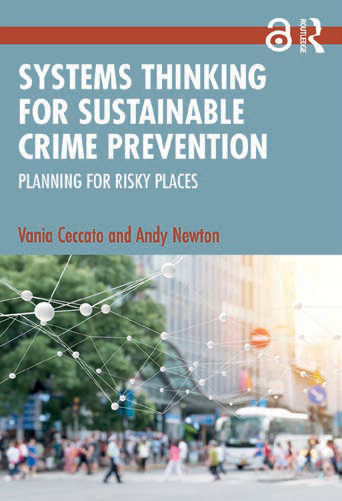
Wanna know more about Vania Ceccato’s research?
Dive into Systems Thinking for Sustainable Crime Prevention, a comprehensive analysis of ‘risky places’ – areas with elevated crime and fear – across diverse global contexts, from small towns to megacities. Drawing on examples from the US, UK, Brazil, and more, this book advocates for a systems thinking approach to crime prevention. Learn how to develop safer, more inclusive environments and address the challenges of implementing long-term, interconnected strategies. An essential resource for urban planners, criminologists, and professionals committed to creating sustainable, secure spaces.
Bo trygt
Tryghedsskabende byplanlægning kan være med til at skabe oplevet tryghed og mindske kriminalitet, herunder indbrud. Siden 2020 har Byplanlaboratoriet været en del af Bo trygt-samarbejdet. Derfor stiller vi skarpt på at få tryghedsfremmende og kriminalpræventive principper ud til planlæggerne. Kontakt projektleder, Mads Angelsø, hvis du vil høre mere. Bo trygt er en indsats skabt af TrygFonden og Foreningen Realdania i samarbejde med Videncentret Bolius og Det Kriminalpræventive Råd.